Sharon El-Amin for Hennepin County Commissioner District 2
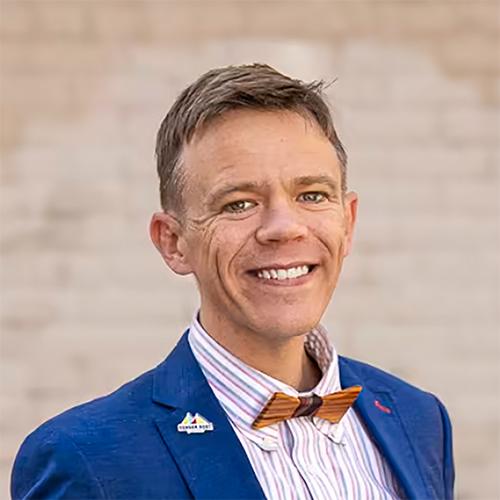
Tiffany: We'd like to welcome on Sharon El-Amin, Minneapolis School Board Director for District 2. She also formerly served as chair of the Minneapolis School Board. Now she's running for Hennepin County Commissioner for District 2, and we're interviewing as many candidates as we can before November 3rd. Thank you so much for joining us, Sharon.
Sharon: Absolutely. Thank you, Tiffany. It's an honor to be with you guys today, so thank you.
Tane: As was mentioned, you're currently serving as a school board director. Why do you want to move from that to this run for Hennepin County Commissioner?
Sharon: Just a couple different reasons. I've sat on the Minneapolis School Board for six years — I'm currently in the role, as you stated — but I've been in my community for over 30 years. Being in the community and serving on the school board, I've seen the makeup of our community, I've seen where the absence is, and I understand the need within our community. Sitting on the school board, I've always fought for academics, for safer schools, for community to be a part of what takes place within the school. But I believe the role of county commissioner gives a bigger opportunity for me to help shape our community.
I live in this community, and I see the children on the street, and I hear from families about everything they want to see — safe schools, after-school programs — and having the opportunity to build up our community is what the county commissioner role allows for. So it's moving from one side to the other, but being able to bring more resources into our community.
Tiffany: As a follow-up — I think a lot of people don't know exactly what a county commissioner does. What do you think it is about being county commissioner that would uniquely let you deliver on what you're seeing is missing right now as a school board member?
Sharon: You're correct, a lot of people don't know exactly the critical role the county commissioner plays. The county commissioner's responsibility is to make sure the human services people need are there and that they're accessible. As a county commissioner, you're overseeing health and mental care, child daycare subsidies, housing stability — the property taxes, all of that is the role of the county commissioner. So the role is to make sure those things are accessible, and that the community knows about the services our county provides and has an easy, accessible way to reach them.
Tane: Can I push on that — you're challenging an incumbent. What are some of the things that, if elected, you'd like to see happen differently — that you'd propose doing differently as a county commissioner?
Sharon: Thank you. So, again, District 2 — north Minneapolis has been home for me. I'm a small business owner, I've served on the school board, I'm a homeowner, and I've been a recipient of SNAP benefits when I first moved into the Minneapolis area. Why am I running, and what don't I see? There's an absence of leadership within District 2. I've tried on a number of occasions to reach out to my county commissioner to understand what's happening with the light rail, what's happening with the HERC — as a business owner, as a homeowner, trying to understand the things we can't get answers for.
As I've been on the ground, I thought it was just north Minneapolis, but it encompasses more than that — District 2, from a county level, is Golden Valley, southeast Plymouth, northeast Minneapolis, Medicine Lake, and St. Anthony Village. On the ground, I'm hearing the same thing: I don't know who my county commissioner is, she doesn't return phone calls, we have a hard time reaching the offices, people can't get in contact with their county commissioner. That role is too critical to be absent. The county commissioner should be at the schools, in the community spaces, providing updated information about where the dollars are going, what's happening with critical projects like the HERC or Hennepin County Medical Center or road construction in our community. Business owners I've talked to say there's just no response.
So coming in as county commissioner: I will communicate, I will be accessible, I will respond. I will keep my community informed of the challenges before us, and also the successes. I will not wait until a crisis happens before we communicate, before community is made aware, and before we have to pivot to other emergency situations — which we've recently seen.
Tiffany: Let's talk about those two topics you just mentioned — the HERC and HCMC. Let's start with the HERC. I think opposition to it continuing to stay open without a set date to close has made Hennepin County commissioners very visible, at least in the press. Sharon, where do you stand on the timetable for closing the incinerator?
Sharon: The HERC has to close — there's no question about that. It's about how we get there. How do we make sure our community is educated, that we're educating people about waste reduction and recycling? Those things have to happen. The timeline from 2028 to 2040 is too big of a gap — it should be closer to 2028, 2029. We have to be able to reach it. To stretch it out that far is just kicking the can down the road.
North Minneapolis is an area with some of the highest levels of asthma and upper respiratory illness. I live in north Minneapolis, and I recently lost my daughter to upper respiratory illness. So I will push for the HERC to close immediately. But I do understand there's a process — we have to educate our community, we have to get to a point of understanding waste management and what the options are on the other side. Community should be part of the conversation. I'd like to see a board made up of community members, commissioners, and county workers who understand the path that can be taken — and clearly bring the community along with us to understand the options. Meetings should be open and public, and community should be part of it. We should be able to champion the change we need together. That 2028-to-2040 timeline — we've already been talking about this for ten, twelve years, if not longer. Put that on top of the existing plan, and it's just too long. Our families deserve better. They deserve direct answers, and we deserve to work together for the county and the city we want.
Tane: First of all, I'm very sorry about your daughter. But I do want to push on this question, because it's obviously important to voters. You said "immediately" — both the MPCA and city and county officials have said that closing the HERC would actually lead to trucking more garbage out, and that those trucks would add to air quality problems and potentially make the situation worse. So what can voters point to — if they elect you — that would be different in terms of that timeline and those options? What can you tell them now: elect me, and we will do this differently?
Sharon: I'm stating it here, out loud, that closing the HERC will be a priority for me. I'm also stating that community will go along the path with me — that board of community members will help educate the community and sit with the county commissioners and county workers to hear what the options are and how fast we can move toward closure. So when I say immediately, it may not literally be 2027 or 2028, but we will immediately know what the options are, and the community will immediately feel like it's part of it, having real-time conversations backed by facts about what needs to happen. We don't want big garbage trucks causing more harm — that's not what the community is asking for. But we are asking for answers, and for a pathway that shows we're headed toward closing the HERC, and that's what I would do.
Tiffany: Let's talk about HCMC. Sharon, as you know, it almost closed this year, and suddenly everyone was talking about how important it is and how crucial it is to the state. For the future of HCMC, what do you think the role of the county and the rest of Minnesota should be in securing its operations?
Sharon: That would've been devastating — losing our number one safety net hospital. As a county commissioner, as a leader, you're expected to bring facts to the community and be very open and direct. This didn't happen overnight. There was a recent article in the Star Tribune about 2023, when these conversations began — the medical board at the time brought forward different options and resources on what could be done, and those red flags were ignored and not shared with the community. The community wasn't aware of where the county was as far as the deficit it was facing. That's information that should be shared with the community — we have to have both the hard conversations and the win, the success stories. We have to bring community along with us.
The medical board was dissolved in 2023, and the county commissioners took over — I think that was a mistake. I believe Hennepin County Medical Center should have a board made up of medical professionals, county commissioners, and community members — the people affected by it. These meetings shouldn't be happening behind closed doors. There was a meeting in 2023 — that video should be public today, and there's no trace of it. Where's the video? Why is the public being kept in the dark about what happened in 2023, and why should we trust the same things won't happen again in 2026 and beyond if we don't elect new leadership? That county board should be made up of county commissioners, county residents, and professionals in the field — they should be the ones considering how the county should operate, with the county commissioner overseeing that budget, not behind closed doors, but with the public and the medical professionals who know the work.
Tane: One of the conflicts between the medical board and the county board was over staff reductions — reducing HCMC's workforce, which medical leaders said needed to happen to rightsize the organization, and there was conflict over whether county commissioners approved of that. If the medical side of the organization said "we need to rightsize this organization, and that will lead to layoffs at HCMC," would you support that, based on their recommendation, as a county commissioner?
Sharon: I think we have to look at other ways to right-size that budget — where are the community partners? What we don't want is for people on the ground to lose the services they need — that's a priority for me. We need to make sure we can provide that. That looks like partnerships, that looks like building more relationships with the state. I'm thankful for the $705 million the state legislature did bring to this space, but we need stability. So we need to be looking at partnerships. We do not want to eliminate jobs, but we do want to make sure we can provide the services that the people who come through those doors — who depend on what the county has always offered — can still count on. That's partnership.
Tiffany: Sharon El-Amin, thank you so much for joining City Cast Twin Cities today and doing some educating on the importance of the commissioner role. We appreciate you sharing your time with us today.
Sharon: Thank you, thank you. If there's any other questions, please feel free to reach out — my website, sharonelamin.org, is where you can find more information about me. Let's just get out and do what's needed for our community, and vote on November 3rd. Thank you.